
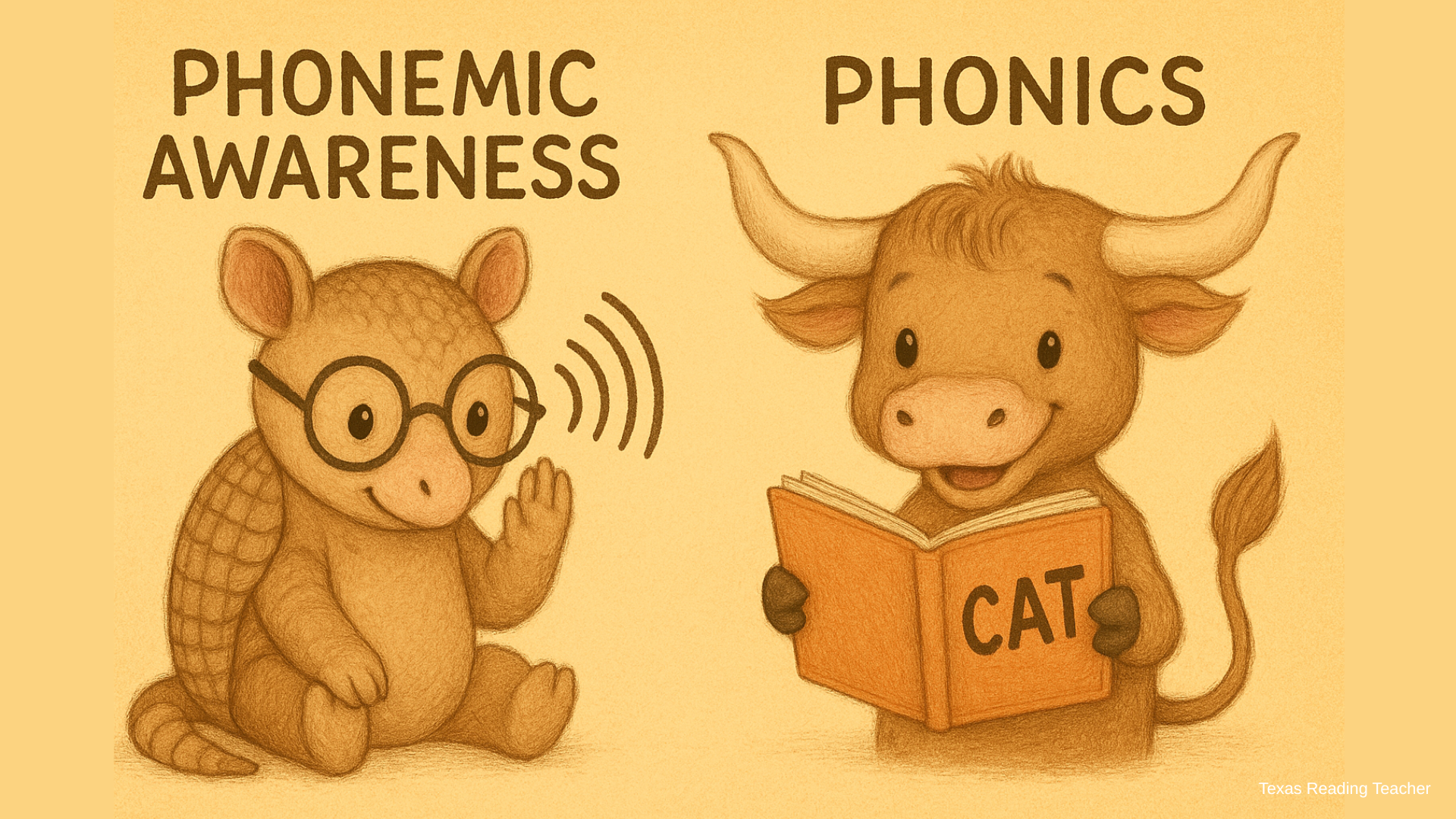
Understanding the difference between phonemic awareness and phonics is essential for both parents and educators working to build strong, confident readers. Though these terms are often used interchangeably, they refer to different but equally important components of early literacy.
Phonemic Awareness: Hearing Sounds in Spoken Language
Phonemic awareness is the ability to hear, identify, and manipulate the smallest units of sound, called phonemes, in spoken words. It is an auditory skill that does not involve print. For example, a child with strong phonemic awareness can:
Identify the first sound in the word “dog” (/d/)
Blend sounds to make a word (/c/ /a/ /t/ = cat)
Segment words into individual sounds (“bat” = /b/ /a/ /t/)
Substitute one sound for another (“cat” becomes “hat” when /k/ is replaced with /h/)
Phonemic awareness is a subset of a broader category called phonological awareness, which includes recognizing larger parts of language such as rhymes, syllables, and onset-rime.
Phonics: Connecting Sounds to Letters
Phonics is the relationship between sounds (phonemes) and the letters (graphemes) that represent those sounds in written language. While phonemic awareness is all about listening, phonics involves reading and writing.
Phonics instruction teaches students to decode words by sounding them out, using their knowledge of how letters and combinations of letters correspond to sounds. For example, a student learning that the letters “sh” make the /sh/ sound is engaging in phonics.
Why Both Skills Are Critical
Phonemic awareness and phonics work together to support reading development. A child needs phonemic awareness to understand how spoken words are made up of individual sounds. Phonics then bridges those sounds to written language, allowing children to read and spell words.
Without phonemic awareness, phonics instruction is less effective. Without phonics, phonemic awareness does not translate to reading. Both are foundational in the process of learning to read, especially for beginning readers and students with reading difficulties such as dyslexia.
Supporting Students at Home and in the Classroom
Parents can support phonemic awareness through simple games that involve listening for beginning sounds, rhyming, and clapping syllables. Teachers can embed phonemic awareness activities into daily instruction and ensure a structured, systematic approach to phonics.
Early and explicit instruction in both areas is essential. When educators and families understand how these skills differ, and how they work together—children are better equipped for reading success.


Leave a Reply