
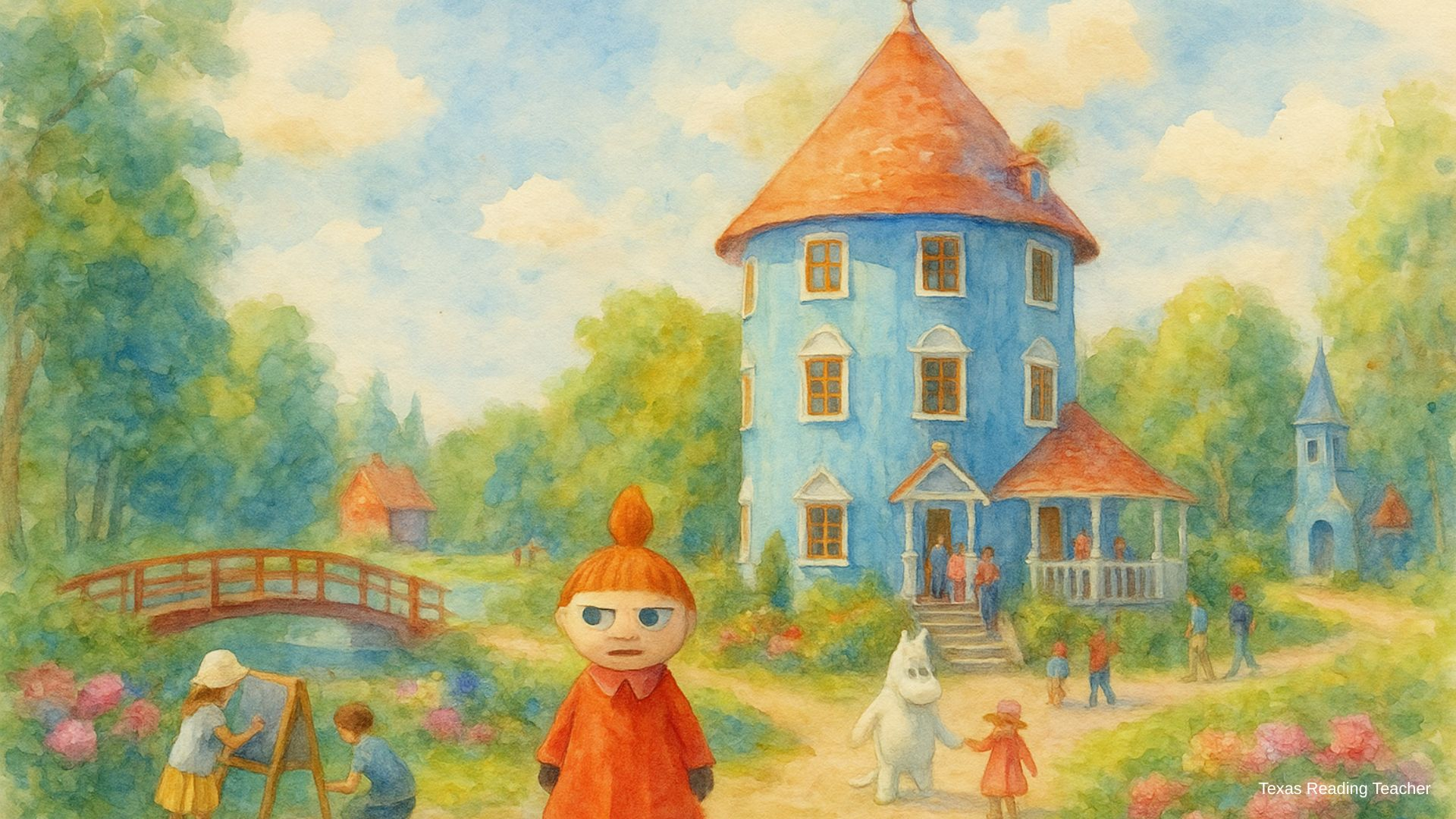
At the end of July, I had the opportunity to visit Moomin World in Naantali, Finland. Unlike any theme park I’ve visited before, Moomin World was peaceful, intentional, and surprisingly calm. What impressed me most was not the charming scenery or the beloved characters. It was the families.
Everywhere I looked, I saw parents actively participating with their children. They were walking hand in hand, reading storyboards together, building crafts, and simply being present. I did not see parents scrolling through phones or children left to entertain themselves while adults sat disengaged. And perhaps most surprisingly, I didn’t witness the end-of-day meltdowns so common in American theme parks. Children weren’t overstimulated, overtired, or overwhelmed. They were simply happy.
It was a culture shock and a beautiful one.
This experience made me reflect on a broader truth. Finland is consistently ranked as having one of the best education systems in the world. That success doesn’t start and end in the classroom. It begins with how the country treats its children. Finland does not see children as a burden. They are not treated as distractions or inconveniences. Children are viewed as individuals with inherent worth, deserving of time, patience, and attention. That value is evident everywhere, even in their amusement parks.
Family Culture Shapes Educational Outcomes
While many try to pinpoint what makes Finnish schools so successful—such as less standardized testing, highly trained teachers, and shorter school days—the deeper reason may lie in the cultural values surrounding childhood itself.
Finnish families spend a great deal of quality time together. There is a national belief that time spent with children is valuable and formative. From an early age, children are raised in environments where they are seen and heard. They are not pushed to perform or compared to others. They are allowed to grow at their own pace and are surrounded by adults who believe that education is not a race. It is a relationship.
This mindset extends to how schools are structured. Education in Finland is centered on the whole child. Play is emphasized in the early years, and academic pressure is minimal until later grades. Students are given space to explore, make mistakes, and find joy in learning. Teachers are trusted professionals, and students are trusted learners. This trust begins at home and is reinforced at school.
The Statistics Tell the Story
Finland’s approach to education is not just philosophical. It is measurable.
According to the Programme for International Student Assessment (PISA 2022), Finnish students scored:
- 484 in mathematics, above the OECD average of 472
- 490 in reading, above the OECD average of 476
- 511 in science, well above the OECD average of 485
Additionally, Finland excelled in creative thinking. In the same PISA assessment, 39 percent of Finnish students reached the highest levels of proficiency in creative thinking. The OECD average was just 27 percent.
The excellence extends beyond childhood. A 2023 OECD study ranked Finland first among 31 countries in adult literacy, numeracy, and problem-solving. Tertiary education is also highly valued. In Finland, 43 percent of adults aged 25 to 64 hold a degree, one of the highest rates in the world.
While Finland’s scores have gradually declined from their early 2000s peak, the country continues to outperform global averages in nearly every educational category. More importantly, Finnish students and adults alike show sustained strength in critical thinking, problem-solving, and lifelong learning.
What We Can Learn
As a teacher, I couldn’t help but contrast my experience in Moomin World with what I see daily in the American education system. In many cases, schools are doing everything they can to support children. However, they are operating within a culture that often sees children as interruptions to adult productivity. Our schedules are tight. Our expectations are high. Parents are stretched thin. And sometimes, children feel that.
In Finland, the investment in childhood is not just financial. It is cultural. It is emotional. And it pays dividends in every sector of society, including education.
Bringing It Home
We may not be able to import Finland’s policies exactly as they are. However, we can begin by shifting our mindset. We can value our children not just as future adults, but as people worthy of our time right now. We can put our phones down. We can listen. We can slow the pace. We can advocate for schools that protect childhood rather than pressure it.
This is not about doing less. It is about doing what matters most.
At the end of our day at Moomin World, I watched a little boy hug a Moomin character goodbye and skip down a forest path with his father. No tantrum. No tears. Just joy. And I thought to myself, This is what happens when a culture gets childhood right.


Leave a Reply