
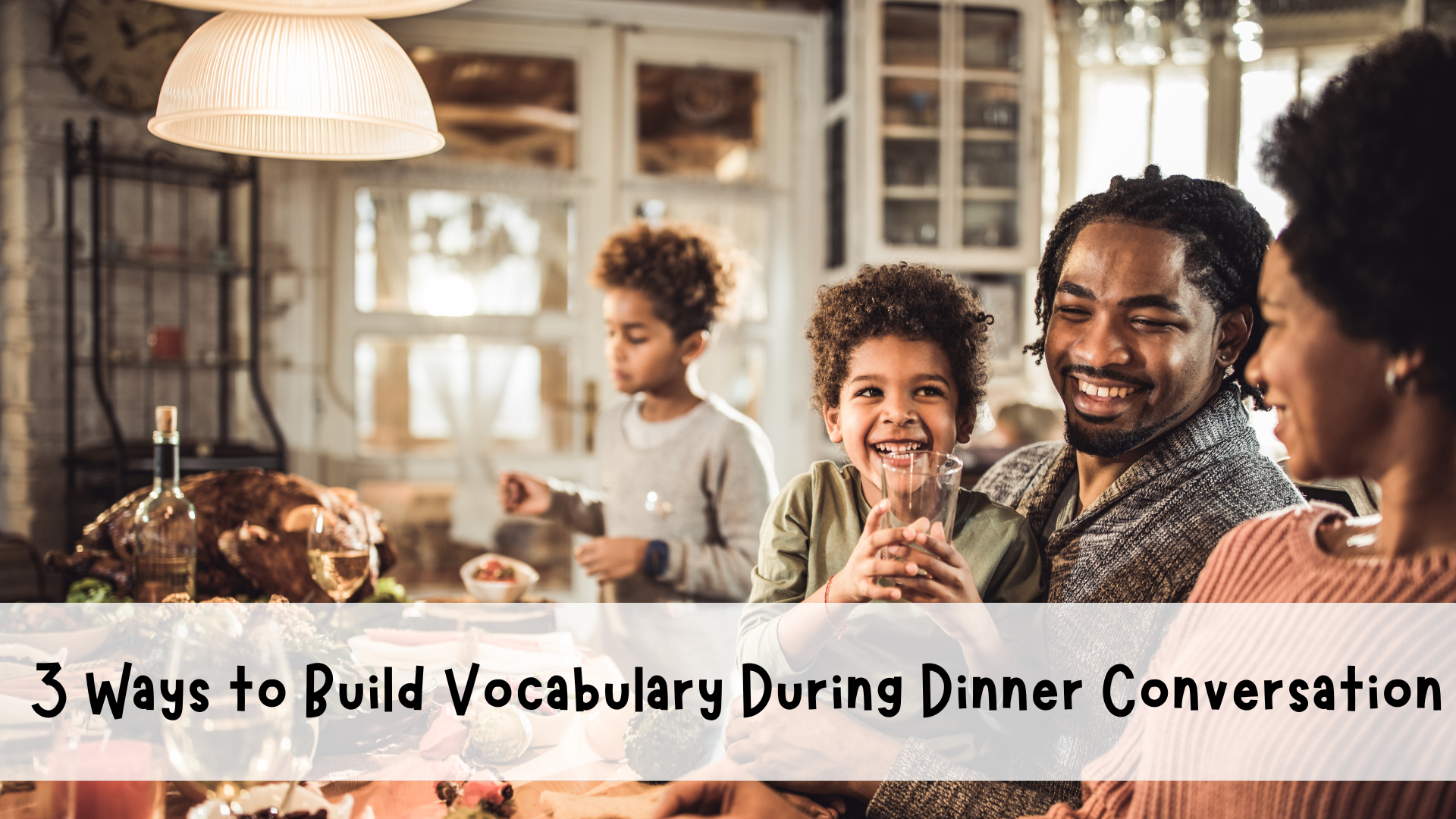
If you’re a parent looking for simple, meaningful ways to help your child become a stronger reader, one of the most effective tools might already be part of your daily routine, dinner conversation.
Research shows that oral language development and vocabulary growth are foundational to reading comprehension and academic success. And the dinner table is the perfect place to model language, introduce new words, and build your child’s vocabulary in a natural, relaxed setting.
Here are three practical and powerful ways to support vocabulary development at home during dinner:
- Use Rich, Precise Language
Children learn vocabulary best through repeated, meaningful exposure. Instead of simplifying your language, try using more precise or descriptive words.
For example:
Instead of “That’s good,” say “That’s incredible” or “That’s impressive.”
Instead of “That’s bad,” say “That’s disappointing” or “That’s frustrating.”
Then take a moment to explain what the word means in context. This helps your child connect the spoken word to real experiences, which leads to deeper understanding and better retention.
Key benefits:
Builds oral vocabulary
Models academic language
Prepares students for complex texts
- Ask Open-Ended Questions
Open-ended questions encourage children to think, explain, and expand on their ideas, creating more opportunities to hear and use new words.
Try questions like:
“What was the best part of your day?”
“Tell me something new you learned today.”
“What was something that surprised you?”
These types of questions require more than a yes or no answer, promoting critical thinking, conversation skills, and expressive language development.
Why it matters:
Strong oral language skills are closely linked to reading success, especially in the early years.
- Try a “Word of the Day” Challenge
Choose one new word each evening and challenge your family to use it in a sentence during dinner.
For example:
Word: “generous”
Use: “It was generous of you to share your snack today.”
Ask: “Can anyone else think of a sentence using ‘generous’?”
This fun, low-pressure activity introduces new vocabulary words in a memorable way and reinforces word meaning through repetition.
Bonus tip: Write each word on a sticky note or create a “word wall” at home to review and celebrate new vocabulary.
Why Vocabulary Matters
Children with strong vocabularies are better equipped to:
Understand what they read
Express themselves clearly
Succeed in school and beyond
By making vocabulary practice part of your family’s daily routine, you’re giving your child a powerful advantage that will support reading, writing, and academic growth.


Leave a Reply